With Genome Atlantic’s support, Wolfden, an Ontario-based mineral exploration and development company, put bacteria to work to extract gold from pyrite, nearly doubling its recovery in an early test. It raises a bigger question: could microscopic organisms help bring promising mineral deposits closer to becoming working mines in Atlantic Canada?
THE QUESTION
How to win gold
“The entire gold grain is encapsulated. There’s no air pockets to get to it anywhere.”
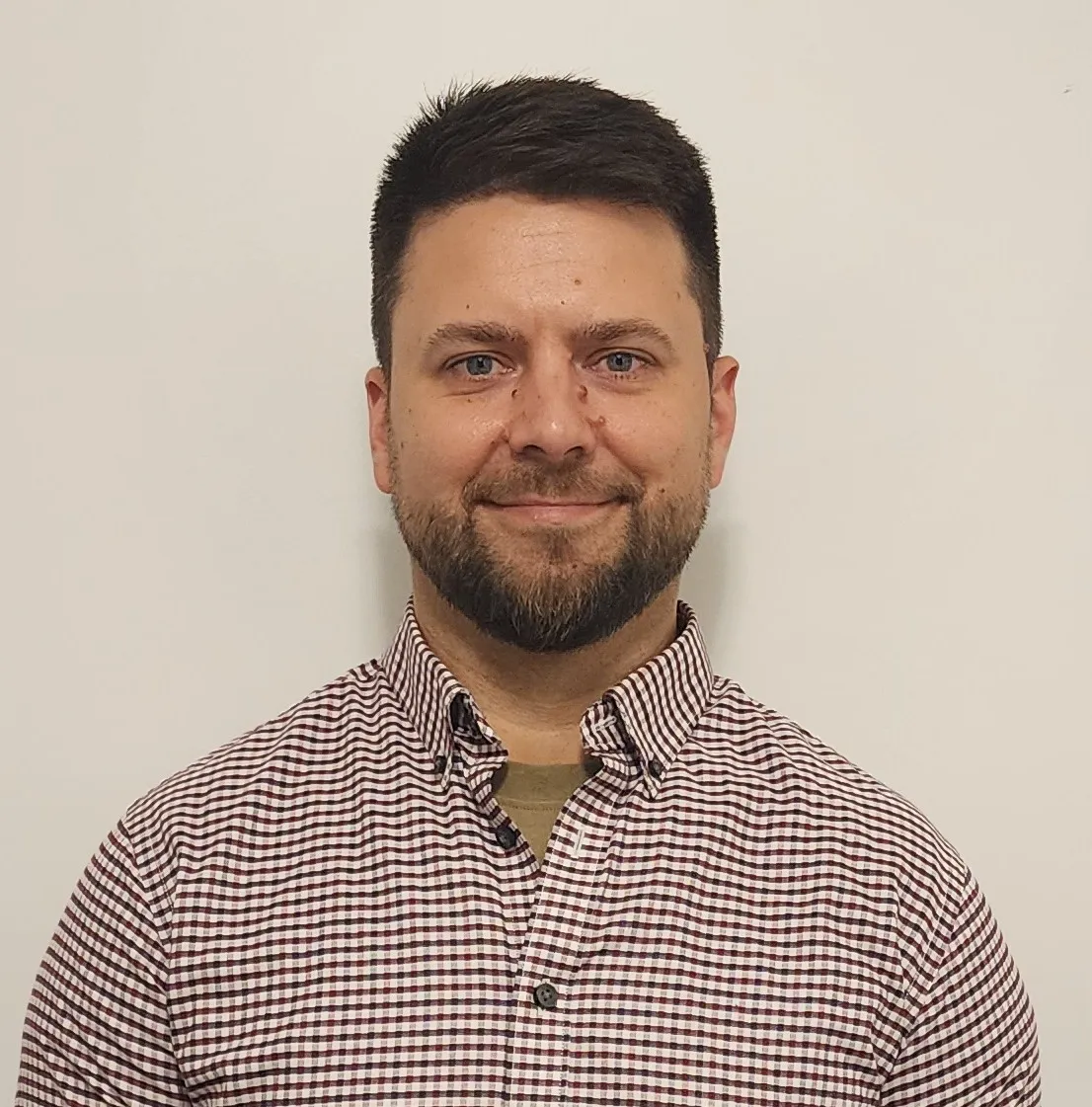
Jeremy Ouellette
When describing the gold deposit at Canoe Landing in New Brunswick, Wolfden’s vice-president of project development, Jeremy Ouellette, holds up a ballpoint pen and asks you to imagine a tiny grain of gold at its tip, barely visible to the naked eye and completely enclosed in pyrite, a mineral made of iron and sulphur.
“The entire gold grain is encapsulated,” he says. “There’s no air pockets to get to it anywhere.”
It’s an especially frustrating situation for a miner. The usual extraction process relies on a chemical solution reaching the gold and dissolving it so it can be collected. With the gold sealed inside pyrite, that solution has no way in.
Even grinding the rock into particles just 20 micrometres across – about the width of three red blood cells side by side – left gold locked inside. Finer grinding might help, Ouellette says, but would take more energy and time, with no guarantee of exposing more gold.
With margins to fund mining projects being especially tight, he said he wanted to explore other ways to recover gold minerals from the Canoe Landing deposit.
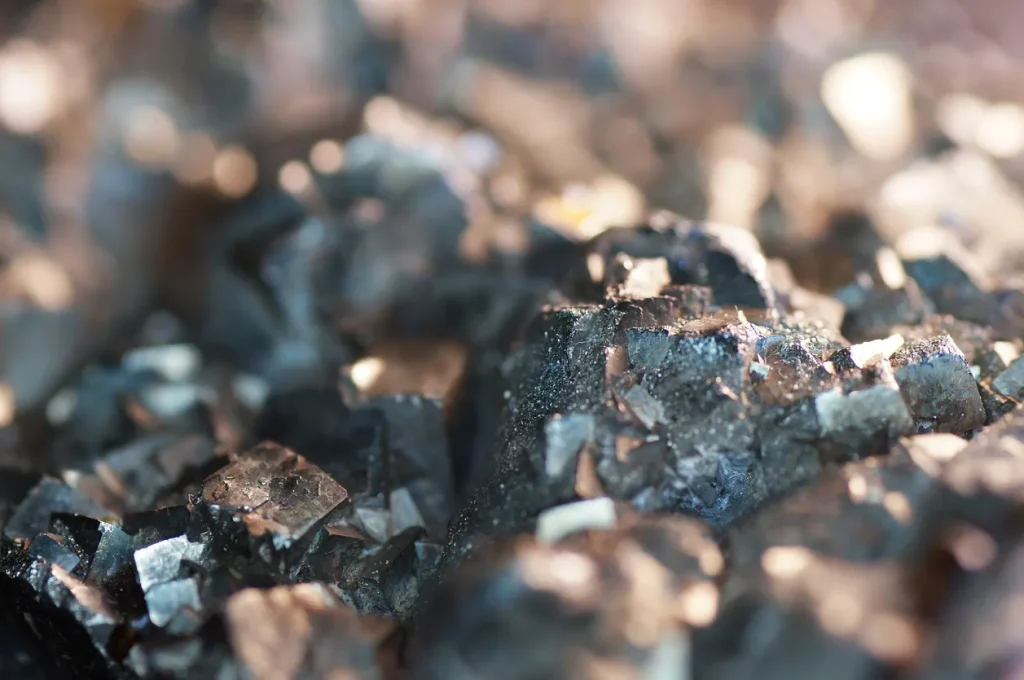
Pyrite, commonly known as fool’s gold, can hold real gold locked within it. This example is shown for illustration and is not a sample from Canoe Landing.
THE ADDITION
An appetite for pyrite
The pyrite that frustrates Ouellette offers certain bacteria a delicious meal. For Leo Cheung, a senior technical advisor at New Brunswick’s Research and Productivity Council (RPC), that appetite offered a way to break down the mineral and release Canoe Landing’s gold.
With support from Genome Atlantic, Wolfden enlisted Cheung to cultivate the right bacteria, give them a suitable environment, and set them to work on rock samples from the site concentrated to gold-bearing pyrite.
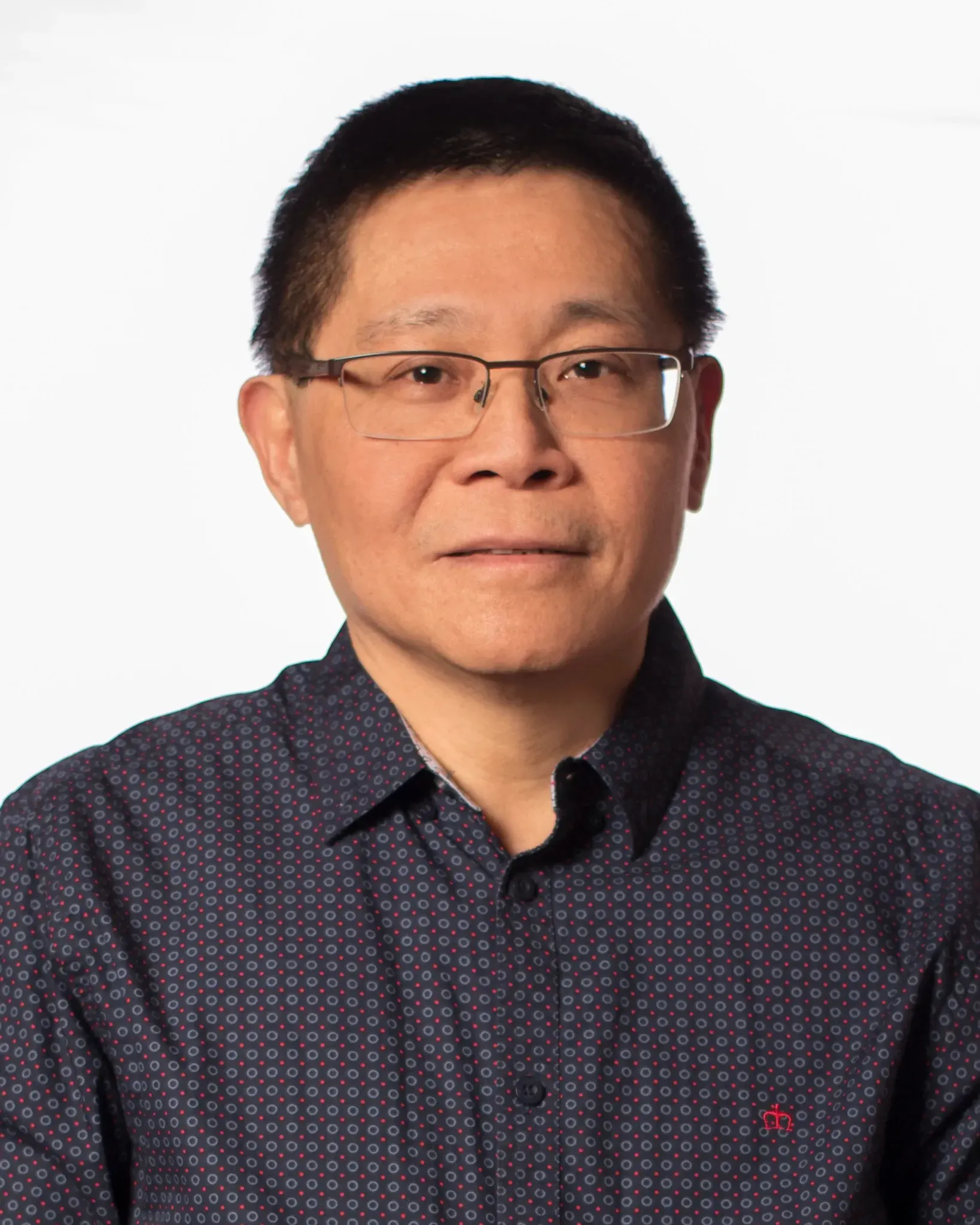
“The bacteria will do the work for you,” Cheung says. “It’s like your free worker, but you’ve got to give them a little bit of food and the right living conditions.”
The microbes drive chemical reactions that break down the pyrite, creating openings that Ouellette likens to holes in Swiss cheese. Cyanide or another gold-dissolving solution can then seep through, allowing the gold to be recovered. Called biooxidation, this biological treatment is gaining ground worldwide in the extraction of precious metals and critical minerals but remains relatively unexplored in Atlantic Canada.
"It’s like your free worker, but you’ve got to give them a little bit of food and the right living conditions.”
Leo Cheung
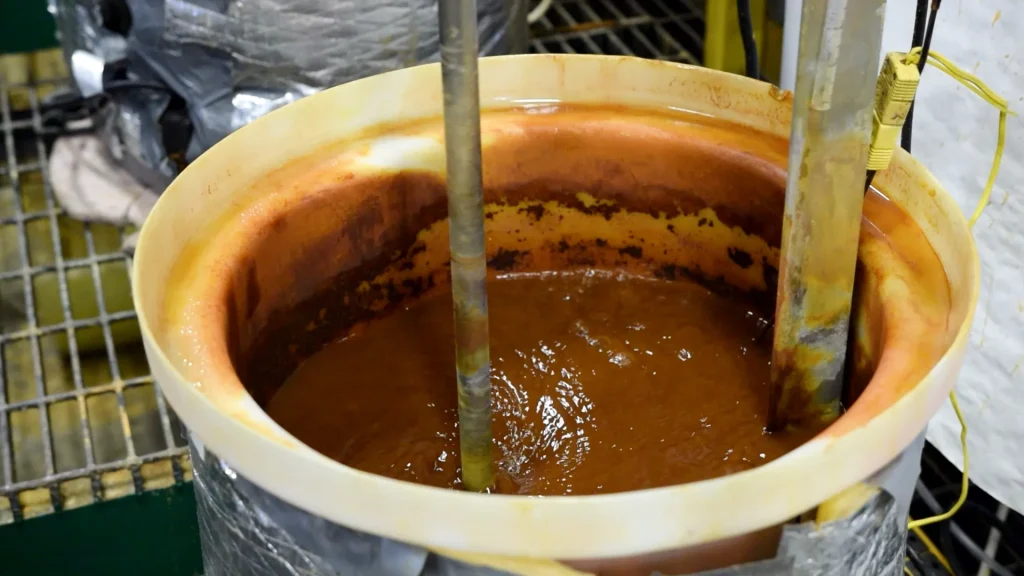
Bacteria at work breaking down pyrite, helping unlock the gold trapped inside.
Cheung says genomics can offer a way to improve microbial efficiency in the process, making the bacteria hungrier, faster, and more resilient. He says that studying the organisms’ DNA could help researchers understand how they draw energy from minerals and survive specific conditions, even those that might otherwise be toxic. That knowledge could potentially guide the selection and development of bacteria suited to the specific demands of deposits like Canoe Landing.
“You want to have the most robust bacteria you can, that can handle any conditions,” Cheung says. “No deposits are the same.”
THE VARIABLES
Bubbles and bugs
“Had it not been for a grant system that was introduced to me by Genome Atlantic, I don’t know that we would have done the tests.”
Jeremy Ouellette
A conversation with Genome Atlantic at a mining industry meeting introduced Ouellette to biological processing and funding to test it.
“Had it not been for a grant system that was introduced to me by Genome Atlantic, I don’t know that we would have done the tests,” he says. “They’re complicated and cost quite a bit of money. We needed that extra push.”
To complete the work, Wolfden sent RPC 40 kilograms of rock from earlier drilling at Canoe Landing. Technicians crushed it into pebbles, then ground it into powder. To separate the minerals, they mixed the powder with water, added chemicals, and pumped air through it.
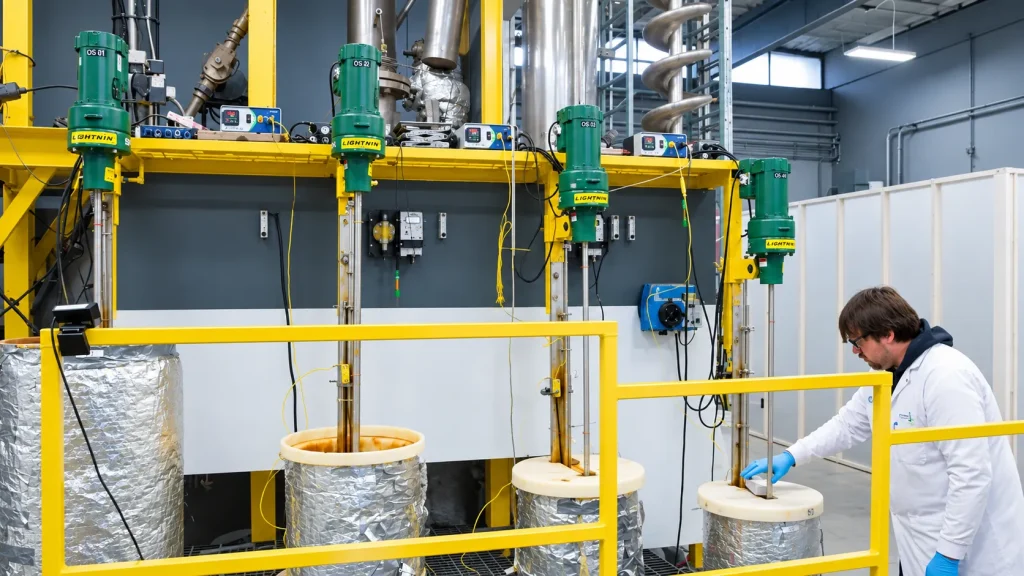
Floatation cells in an RPC lab where minerals are separated and microbes are added.
A conversation with Genome Atlantic at a mining industry meeting introduced Ouellette to biological processing and funding to test it.
“Had it not been for a grant system that was introduced to me by Genome Atlantic, I don’t know that we would have done the tests,” he says. “They’re complicated and cost quite a bit of money. We needed that extra push.”
To complete the work, Wolfden sent RPC 40 kilograms of rock from earlier drilling at Canoe Landing. Technicians crushed it into pebbles, then ground it into powder. To separate the minerals, they mixed the powder with water, added chemicals, and pumped air through it.
Within the murky mixture, the bacteria were busy making a meal of the pyrite. After four weeks, the team treated the solution with cyanide to discover how much gold they could draw out.
THE OUTCOME
A reason to drill again
GOLD RECOVERY IN AN EARLY TEST
32% → 60%
“We have done a single test. We’ve got a single data point. That data point is positive. Can we improve on it? I think there is a possibility we could,” Ouellette says.
The results have already attracted attention. Since announcing them, Ouellette has fielded questions about the process and heard from people keen to see where it leads.
“I’ve got a lot of feedback. A lot of kudos, and people saying, ‘interesting’. We’re going to keep following the story,” he says.
Next comes drilling fresh samples, testing different grades and grind sizes, and working out what a full-scale process would cost. If successful, the approach could also help recover gold from other deposits where it remains trapped in pyrite.
“It’s not to say that tomorrow I’m going to say, ‘Let’s go start a mine,’” Ouellette says. “But it is indicative and interesting enough for me to say, I want to go drill some holes and get fresh core.”
Discover mining’s next opportunities
Learn how genomics can help find deposits, recover metals, and restore mine sites in Genomics and Mining in Atlantic Canada, a report commissioned by Genome Atlantic.
Genome Atlantic brings businesses, governments and researchers together to turn insights from DNA into practical solutions that advance Atlantic Canada’s priorities — improving health, increasing productivity, supporting business growth and creating jobs. Industry partners committed more than 25 per cent of funding for new projects in 2025–26, bringing real-world challenges, investment and technical expertise to research that strengthens Atlantic Canadian businesses. Genome Atlantic receives business development funding from the Atlantic Canada Opportunities Agency (ACOA) and the governments of New Brunswick, Newfoundland and Labrador, Nova Scotia, and Prince Edward Island. Core operational funding is provided by Innovation, Science and Economic Development Canada’s Strategic Science Fund through Genome Canada.